For a Few Model Years, Every New Car in America Had a Speedometer That Stopped at 85

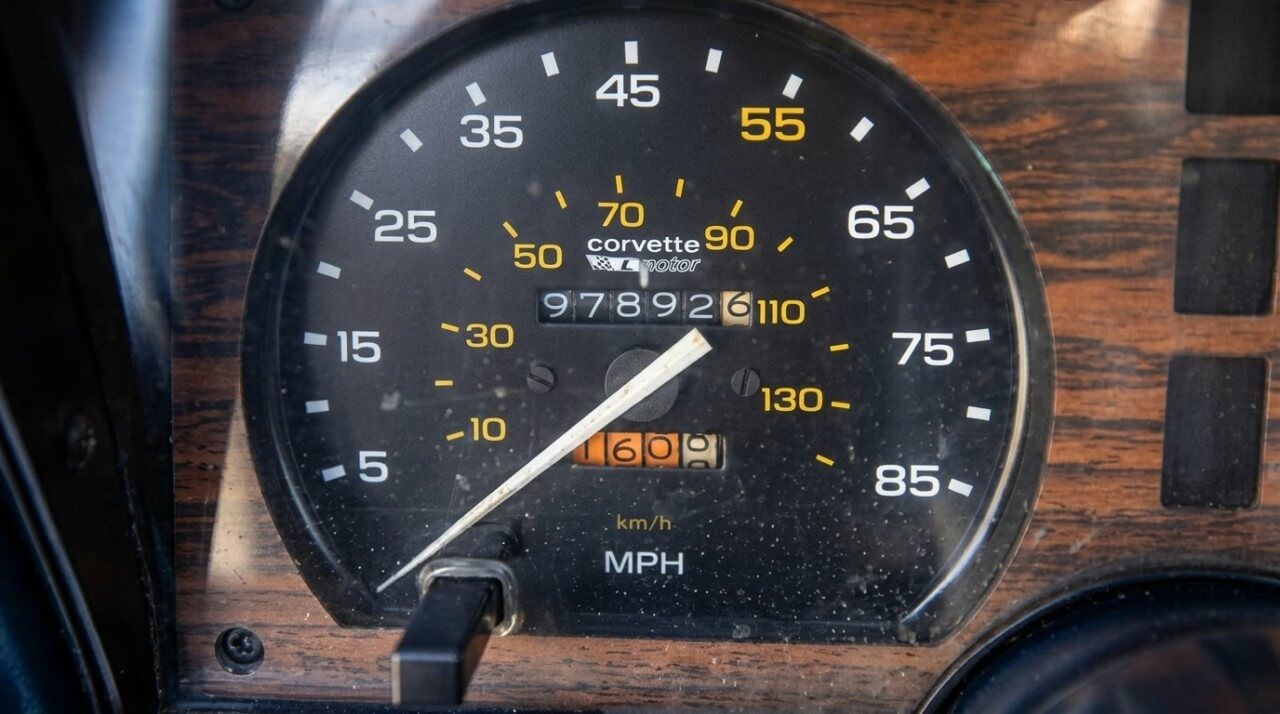
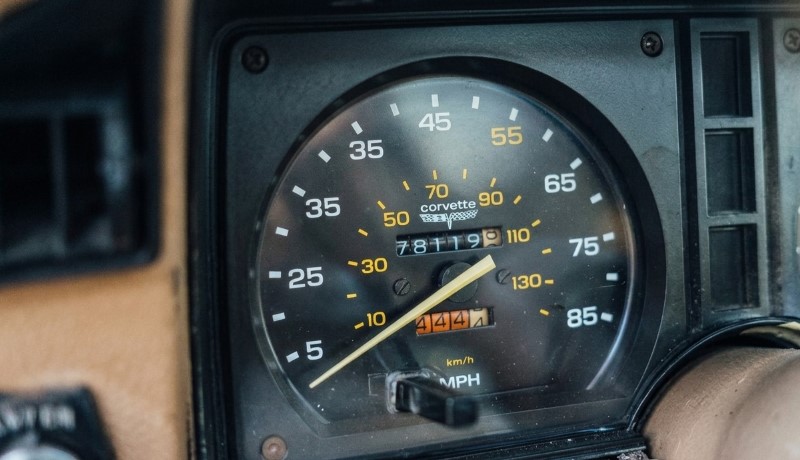
For a brief period in American automotive history, even a powerful Chevrolet Corvette had a speedometer that stopped at 85 mph. The car could exceed that speed. Its dashboard simply wasn’t allowed to show it.
It wasn’t a design mistake or a cost-cut measure. Federal law restricted speedometer scales to 85 mph, under a rule that took effect on September 1, 1979.
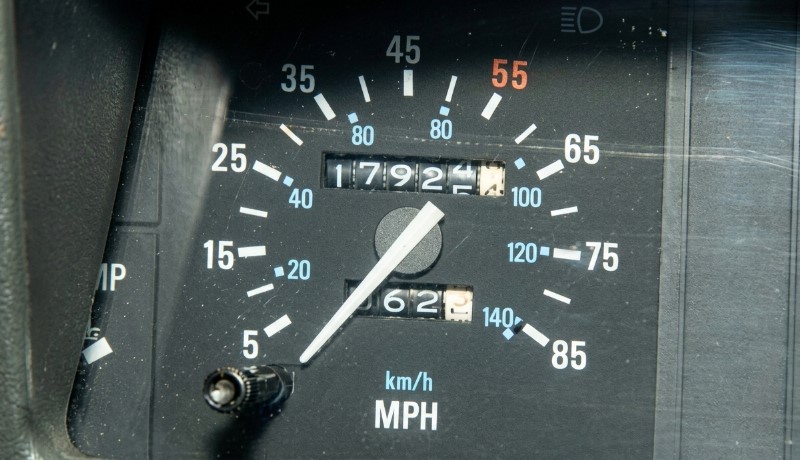
The National Highway Traffic Safety Administration (NHTSA) established the requirement under Federal Motor Vehicle Safety Standard No. 127. Its official interpretation prohibited speedometer scales above 85 mph or 140 km/h. Automakers could also use lower maximum values.
The restriction primarily shaped 1980 through 1982 model-year vehicles. Its influence lasted even longer.
Why Did the Government Choose 85 MPH?
The answer starts with America’s national 55-mph speed limit, introduced in 1974 amid the oil crisis. Federal officials wanted slower traffic, fewer fatal accidents, and lower fuel consumption.
The 85-mph speedometer was another attempt to discourage excessive speed.
Regulators believed a speedometer with a 120- or 140-mph scale could tempt motorists to test their cars’ limits. A shorter scale was supposed to remove some of that temptation.
The rule also required a prominent 55-mph mark and speed scales in both miles and kilometers per hour.
But the restriction never affected actual vehicle performance.
The 1980 Chevrolet Corvette offered a 5.7-liter V8 with up to 230 horsepower. Its speedometer still topped out at 85 mph.
The 85-MPH Rule Didn’t Last Long
By 1981, federal officials had begun to question the regulation’s effectiveness.
On October 23, 1981, UPI reported that the Reagan administration planned to eliminate the speedometer restrictions. Safety officials saw little evidence that the rule produced significant safety benefits.
In February 1982, the government published its decision to revoke Standard No. 127. The repeal took effect that spring.
Automakers were once again free to install speedometers with higher maximum values.
However, the change wasn’t immediate across the industry.
A 1982 automotive industry survey found that importers generally favored a return to speedometers that reflected vehicle performance. American manufacturers were more inclined to retain the existing 85-mph scales.
Some vehicles continued to use the old design after the repeal.
A June 1983 technical service bulletin documented Subaru’s move to a 120-mph maximum digital speed display. The revised instruments appeared on applicable vehicles built as of April 1983.
The federal requirement was gone. Its legacy remained on American dashboards.
The Carsenter View
Few automotive regulations illustrate the difference between perceived safety and practical safety quite so clearly.
I find the idea fascinating. Officials attempted to influence driver behavior by altering a simple instrument rather than the car’s actual capabilities.
A sports car didn’t become safer merely because its speedometer stopped at 85 mph. Beyond that point, drivers simply lost a clear numerical reference for their speed.
The most remarkable part is how quickly the policy disappeared after federal officials questioned its benefits.
Today, a vintage 85-mph speedometer is more than an unusual dashboard detail. It’s a reminder of an era when the government believed a smaller number on a dial could encourage Americans to drive slower.